
Legend of Korra
Book 2: Spirits, Chapter 7
Preface: For those reading in Legend of Korra’s broadcast order, it’s important for me to note here that the reviews for these two episodes are the first I’ve ever done for The Legend of Korra, way before I decided reviewing the entire series. If my writing here seems somewhat inconsistent style-wise or otherwise self-contained and divorced from the context of the rest of the series, it’s because this was written as a one-off without plans to do the rest of the series. This is also why there’s a summation at the end of Part 2’s review. I apologize for any confusion, and I hope you can enjoy regardless.
A while back, I talked about The Legend of Korra on my podcast with two friends (Haters Without a Cause, check it out). You could say I expressed a more…cynical opinion of the show. But my fellow podcasters were particularly shocked at the fact that I dislike Beginnings, the origin story of the Avatar, so much. And I still do. I consider them to be the worst episodes of the show, just in terms of the sheer damage it does to the worldbuilding of the Avatar franchise. But Beginnings is considered to be a highlight of the show, even among people who otherwise hate it. I got some points out on the show but I’m not super proud of how well I articulated my points or how much ground I really covered.
But fret not! Here I have the time and space to go in detail of how catastrophic these pair of episodes really are. Oh and hey! WELCOME TO THE FIRST NOIR PIECE ON A TV SHOW! This is going to be something of a break from formula in that I’m not covering Legend of Korra in its entirety (probably…never say never). I’m actually also not going to summarize plot, character, and themes, as my problems with this pair of episodes pretty much all come down to worldbuilding. As for why I’m not giving a score, I find the damage done to be self-evident and trying to quanitfy it with a number just seems pointless. We’ll still have fun breaking down the story as always though. I guess this is more like the weird pilot episode before the formula is established…or a special!
Anyway, let’s get right into it.
After Korra’s decidedly underwhelming intro, the annoying 1920’s radio recap brings us up to speed on the events leading to this episode: On her way to Fire Nation to seek allies against Unalaq’s conquest, Korra is attacked by a dark spirit. She’s washed up on some island with no memory of who she is.
That’s right, Korra has amnesia. We’ve slammed the brakes on Book 2’s momentum to give us an origin story for the Avatar…which isn’t a story I really think we need, but hey! That doesn’t mean it can’t be awesome, right? Let’s just go with it for now.
Korra, who is comatose and can only mumble “Raava” over and over, is being toted by some Fire Sages to a temple of some sort. A female Fire Sage (who looks remarkably like Azula…the episode doesn’t give her a name either so I’m just going to call her that) waves some fire around her and concludes she’s been infected by a “dark energy.”
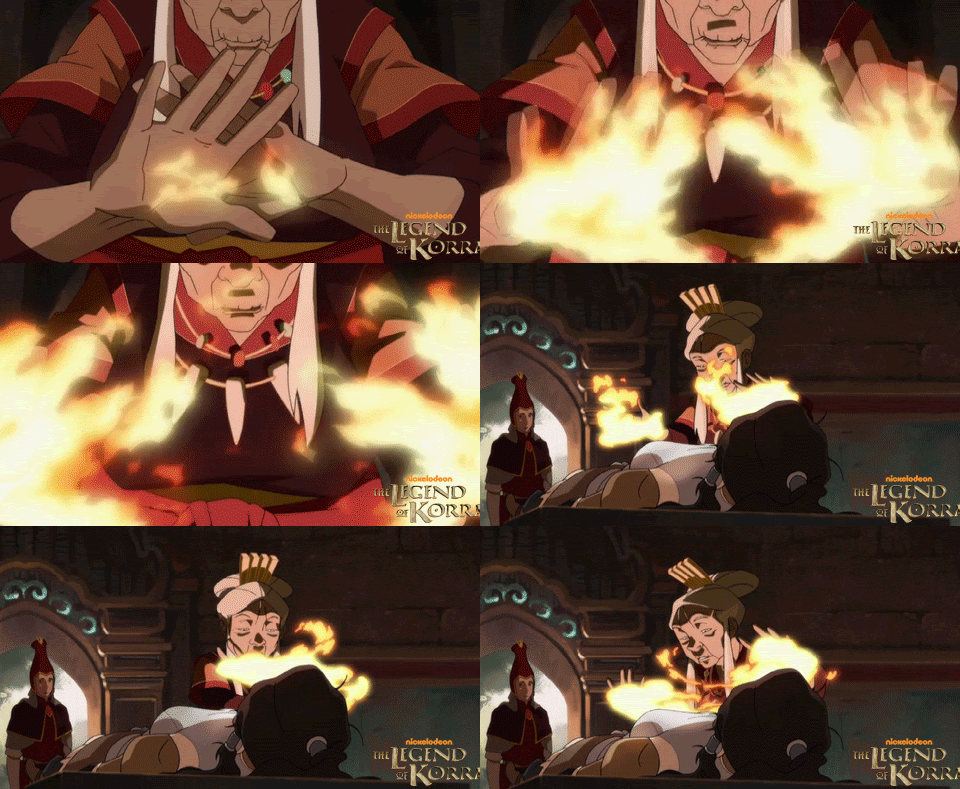
I am so sorry, but what the blazes is going on here? Since when can you detect spiritual energy by waving some fire over someone’s body? Wouldn’t a spirit-related bending technique like this be water-based? Or air-based? There doesn’t even seem to be anything particularly special about this fire. Why haven’t we seen a technique like this used before?
Whatever, I guess. Legend of Korra has really never given a shit about keeping the mechanics of bending consistent so why start now? Besides, this isn’t even the worst violation of bending this pair of episodes is going to engage in.
Anyway, Azula says that they must purge this “dark energy” before it destroys Korra’s Avatar spirit. So they begin lowering her into a pool of…spirit water I think?? I don’t really know because I thought spirit water could be found in the Spirit Oasis at the North Pole. It was special water with special properties, probably because it was inhabited by two spirits.
But I guess this random Fire Nation island has it too.
Kay.
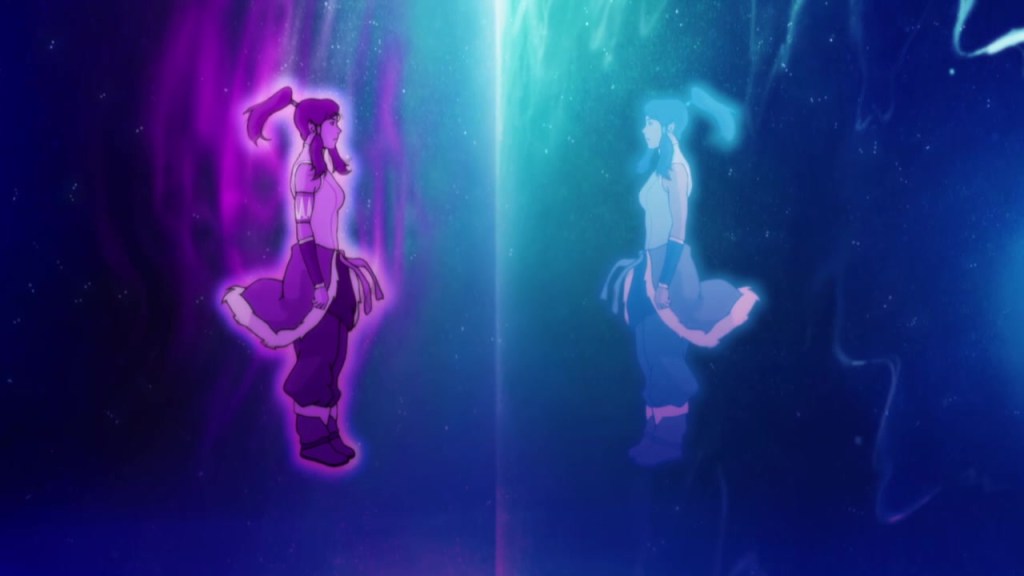
So Korra enters what I’m going to assume is the astral space that every Avatar has access to, and she begins talking to a mirror image of herself. The mirror image morphs into Aang, then Roku, Kyoshi, and Kuruk and they tell her that she needs to regain her connection to her Avatar spirit or she’ll lose it forever and die. And in order to do this, she needs to find “Raava.”
So this is kinda like what happened to Aang when Azula shot him in the back with lightning. There was an online game called Escape to the Spirit World that depicted Aang’s spirit going on a similar path to regain his connection with his Avatar spirit while his physical body healed. During his journey, he learned a little about the lives of the previous four Avatars. Conspicuously, Aang was able to regain his connection without learning a single thing about Raava. Yet Korra needs to find Raava or she’ll die, even though she only has amnesia and is completely unharmed physically. I guess Bryke was banking on most people not playing/remembering that online game.
You guys notice that this renders the whole amnesia thing completely unnecessary to the story as well? The whole point of this is to find out who Raava is because Korra (and the audience) doesn’t know. But this is something Korra (and the audience) didn’t know even before she got amnesia. It’s not like it’s something she knew and then forgot. What we’re about to learn is information she never had in the first place. So we really don’t need to use this spirit cleansing bullshit as a framing device at all. We know past Avatars can link up with the current one to tell them a story or give them pertinent information so why couldn’t we just do that?
Anyway, Korra comes face to face with a man in plain orange clothes and amber eyes. He says his name is Wan, and he’s going to tell her (and us) how he became…the first Avatar.
Oh boy.
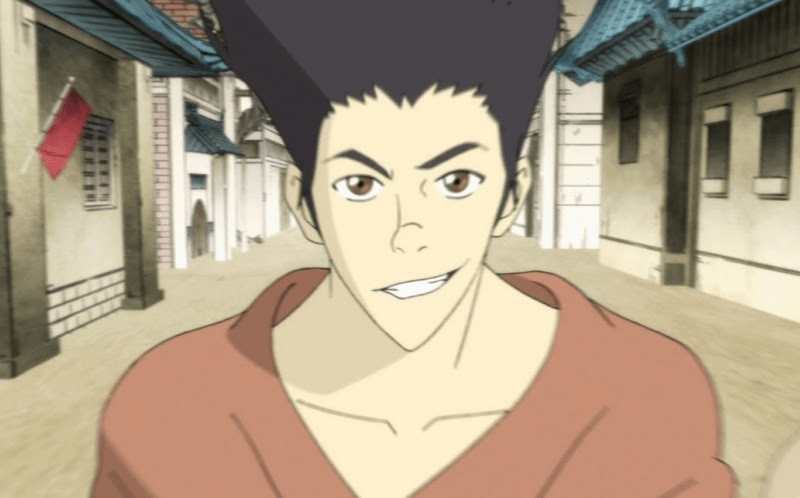
We’re thrown into flashback world and I already have things to say about the art style shift. You’ll notice that Wan’s world resembles traditional Chinese inkwash paintings/Japanese woodblock paintings. This is great! It adds immersion and personality to the era before the Avatar. There’s just one problem. Other than the colors being flatter, the characters look mostly the same as they do in the modern era. They have the same line thickness, same goofy expressions, etc. I’m afraid if you simplified Korra’s color scheme she wouldn’t look too out of place in this world. Hell, Wan kinda just looks like Mako with a different haircut. Why go through the trouble of giving new life to the background, props, and even effects, but not the people? Imagine if they were drawn with thicker line strokes, maybe with some white around the edges due to the ink not being completely filled in.
Oh well. We’ll call that a nitpick. And a missed opportunity.
Our introduction to Wan has him running off with some bagged goodies he’s stolen from the Chou brothers, who look like Russian nesting dolls.
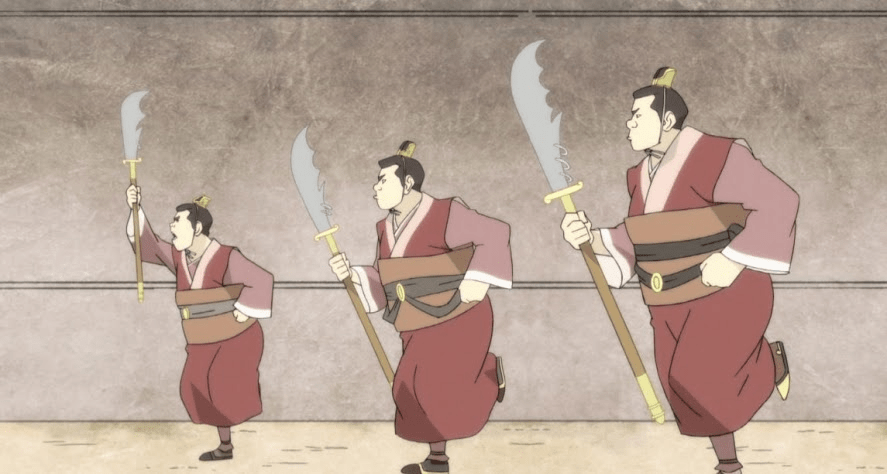
He’s stolen food from their stock so he and his friends can eat. He gets into some antics while escaping and eventually the Chous catch up with him, whereupon Wan throws a roll at one of their faces. He isn’t able to get away with it, however, and he’s thrown out of the estate for his troubles.
We got a problem that, admittedly, a lot of shows and movies fall into. We’re supposed to be view Wan as sympathetic. The poor and downtrodden in contrast to the Chous being the spoiled, rich people at the top of the chain. But they forgot to make the Chous unsympathetic. Being rich isn’t an inherently negative trait. We’re not given any indication that the Chous gained their wealth through illegitimate means or are otherwise immoral. Wan, however, is shown stealing from them while laughing at their expense, at the risk of being put to death by the Chou elder or banished to the Spirit Wilds (Believe me, we are going to talk about the Spirit Wilds). It’s almost like the show is banking on our knowledge that Wan is going to be the Avatar, and is thus the protagonist of this story.
If you didn’t know Wan was supposed to be the Avatar, what would your impression of him be?
I’d almost believe that he’s an Aladdin-type character, a thief with a heart of gold. I say “almost” because the “One Jump Ahead” sequence does a much better job of endearing us to Aladdin than this opening endears us to Wan. So why is that? Well for starters, Aladdin steals food, and only food, exclusively from lower-level merchants when he’s certainly capable of greater acts of theft. He even chides Abu for stealing some jewelry. It’s easier to side with him over the Agrabah royal guard, who explicitly want Aladdin dead for what’s essentially petty crime he only engages in for survival. It helps that a lot of the citizens that know Aladdin see him as a lovable nuisance at worst. The cherry on top is that he gives the bread to some poor children without a second thought.
To be fair, we don’t really see Wan interact with the other citizens outside of his treehouse friends so we don’t really know what his reputation is in his city. But the Chous seem like the sort of high-risk targets Aladdin would avoid while Wan steals from them, seemingly for the thrill of it. He does this against the warnings of what seems to be his only two friends…and doesn’t even succeed. And no, Wan giving his roll to some birds and squirrels is not equivalent to Aladdin giving his food to children. What makes the latter meaningful is that Aladdin is sympathetic to children in a position similar to him. These critters are not starving. They have the means to find food out wherever they go in and out of the city. They most certainly don’t “need it more than [he does].”
So we meet Wan’s treehouse friends, Jaya and another man named Yao. Yao’s appearance instantly draws the viewers attention. He’s been twisted into becoming half-tree after being possessed by a spirit. He’s adamant that being banished to the Spirit Wilds is far worse than death. Jaya finishes by saying, “You just gotta accept the world the way it is. Some people have power, some people don’t…and you don’t.”
Wan sips some of his tea and says ominously, “Not yet, anyway…”
We then see a group of hunters asking for volunteers to help venture into the Spirit Wilds for a week to gather food for the city, and Wan volunteers, after making sure that they’ll get fire.
…Hang on. “Get” fire? That’s not how it works.
The leader huntsman confirms they do, and asks Wan if he’s sure he knows how to use it.
“Know how to use it?” That’s not how it works! Where are you going with this, episode?
We then move outside of the city and we see that the city sits atop a massive lion turtle. The huntsman blows his mighty horn to summon the beast and the lion turtle awakens (I guess without disturbing the people who live in the city or disrupting any of the architecture).
And just in case you needed the extra help, Wan says in awe, “It’s the lion turtle.”
Thanks, Wan.
The huntsman asks the lion turtle to “grant” everyone to element of fire. The lion turtle taps them on the head and chest like they did with Aang and says the fire is theirs to keep until they return.
Alright.
WHAT THE FUCK.
We have now reached our first major crack in this universe’s worldbuilding. See this? This right here?
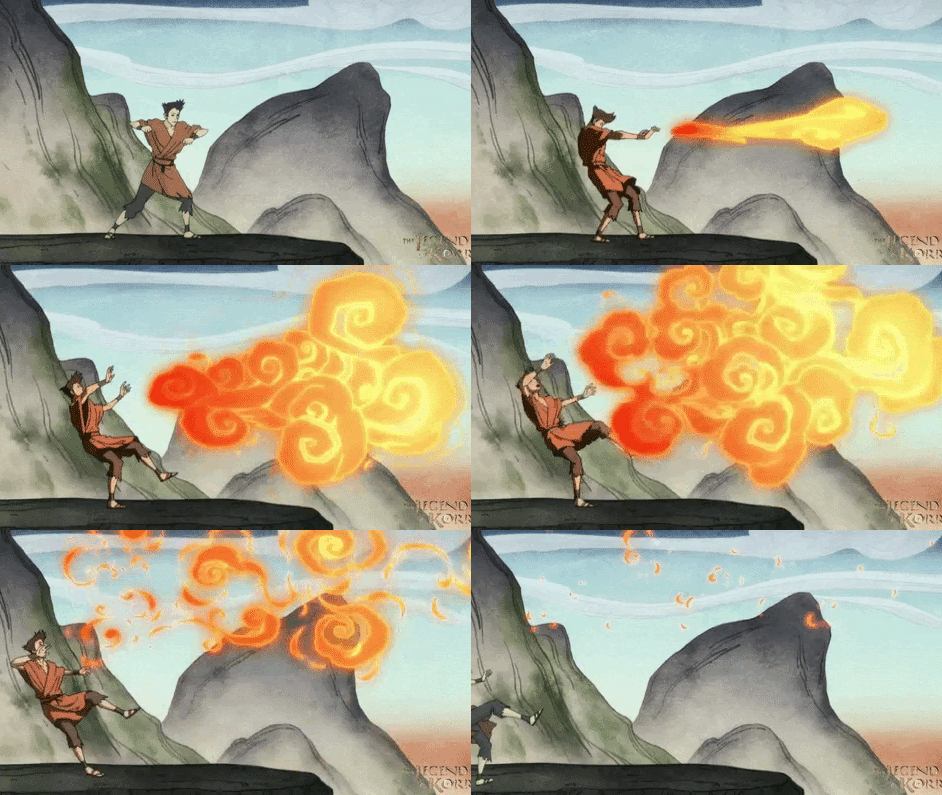
I’ve said already that Legend of Korra breaks bending, but now? We have officially Broken Bending Beyond Belief.
Remember when Aang needed to be drilled on the fundamentals of breathing before even conjuring fire? Well, this is Wan blasting fire. That is an honest-to-God fire blast. You get handed fire and you can just use it immediately. No prior training, no experience, no foreknowledge, nothing. And this is on accident. The idea of bending being a genetic trait, a cultural tradition, and a martial art discipline has been completely thrown out the window.
Remember when the The Last Airbender made clear that bending was learned by humanity through outside forces? Earthbenders mimicked the movement of the badgermoles. Firebenders learned the dance of the dragons. Airbenders learned from the sky bison. Waterbenders observed the push/pull relationship the moon had with the tides. Well not anymore! Instead of accomplishing these things through periods of learning, trial, and effort, now bending is just a superpower you can get from a vending machine!
🤓☝️ “But Ibrahim, that all still happened! They got the elements from the lion turtles and then refined how they were used by observing nature!”
Nope, sorry. The lion turtle in Last Airbender explicitly says, “In the era before the Avatar, we bent not the elements, but the energy within ourselves.”
This is the era before the Avatar, and these folks are very blatantly bending the elements. Energybending doesn’t come up even once in this two-parter. A contradiction doesn’t get any more clear cut than this. It’s a complete retcon.
🤓☝️ “But Ibrahim, this is still definitely how bender genes originated! From the people who kept the bending from the lion turtles!”
Except Yue said the moon and the ocean were the first waterbenders. Toph said badgermoles were the first earthbenders (not to mention the first human earthbenders are said to be a pair of lovers Oma and Shu who observed badgermoles). Aang said sky bison were the first airbenders. Zuko said dragons were the first firebenders.
NOT FUCKING LION TURTLES.
🤓☝️ “But Ibrahim, this is ancient times! Everyone might have just forgotten the old ways of bending and re-learned it through observing nature! Those characters might just be misattributing the true origin of bending!”
Oh okay, so everyone in The Last Airbender is just wrong. Yeah, sure, let’s go with that. Except for the teensy-weensy detail that Wan is clearly bending here with no skill or expertise whatsoever. He is just punching the air! How the fuck did people forget the “old ways” of punching the fucking air?
🤓☝️ “But Ibrahim, it…uh…it explains how Korra is able to bend as a three-year-old!“
Yeah…yeah, I guess it does…
That’s enough out of you, Nerd Emoji. We have Broken Bending Beyond Belief and we are moving the hell on.
Actually, wait a damn minute. Why do the Lion Turtles gives people bending for the purpose of defending themselves against the spirits? Are they opposed to the spirits or something?
Oh whatever.
So after a few paces into the forest, Wan pretends to get really really scared so the huntsman can kick him out of the boys club. He tells him to give his fire back to the lion turtle and get out of his sight. But you see, it was a double cross! Wan pulled the con so he could keep the fire for himself!
A con that I guess no one has ever tried before, because the huntsman just lets him go and assumes Wan will return his new superpower out of the goodness of his heart.
Kay.
He goes and shows off to his friends (including Yao, who as I mentioned before is partly made of wood), and tells them his latest scheme: he’s going to rally the people to raid the Chou estate and steal their food. And he’s going to use firebending to intimidate them into submission.
I think it’s safe to say that any comparison to Aladdin is out the window at this point.
Look at this exchange between Wan and Jaya, just outside the Chous’ gates.
[Jaya]: You know it’s forbidden to bring the power of the element into the city. Please, go back to the lion turtle and return the fire.
[Wan]: Jaya, it’s time to stop being so afraid of the Chous and show them we have the power to change things.
After this, Wan masks and up and Jaya joins him with the rest of the gang! The fuck?? Jaya followed him all this way to caution Wan against going through with this, Wan responds with one sentence and Jaya just folds like a deck of cards? This dialogue is fucked anyway because Jaya’s caution was about the forbideen act of bringing fire into the city, a law I’m pretty sure is set by the lion turtle, not the Chous. Yet Wan responds as if “stop being afraid of the Chous” addresses the fact that he stole an element from the lion turtle. Oh well. I guess Jaya is just happy to rally behind him now.
So Chou the Elder spots them from atop his tower and he honestly says, (and I’m not kidding) “What are those filthy peasants doing here?”
The nesting doll brothers volunteer to go confront them and they honestly say, (and I’m not kidding) “You’re not getting past us! We have the weapons! You’re powerless.”
It’s like a third-grader wrote this dialogue.
So Wan blasts fire at the Chou brothers (without burning them) and blasts open a wooden shed (without burning it). Jaya, finally feeling the Communist spirit, tells Wan that maybe he was right about being able to change things. Wan then allows everyone to escape by throwing fire at many, many Chou guards…without burning them! Wow, Wan has really good control of this fire for a first-timer. Unlike that doofus Aang, who burned Katara the first time he used fire.
What a pussy.
So Wan creates a fire circle and has one of the Chou brothers at his mercy. Wan hesitates just long enough to kill him that he dissipates the fire and is tackled to the ground by the guards.
What’s funny to me is that the ungrateful bastard tells Wan, “Even when you have the power, you’re afraid to use it,” even though Wan was scorching everything in the vicinity.
Wan is then banished from the city, only the lion turtle allows him to keep his fire so he can protect himself from the spirits. Lucky break, considering he threw fire in the faces of people who couldn’t protect themselves. Though Wan, to his credit, refuses to rat anyone else out for being involved in the rebellion. We can only hope the Chous don’t just dole out punishment indiscriminantly to all the citizens.
We get a shot of Jaya and Yao, Wan’s only friends who sat on their asses all day in his treehouse while he went out daily to get food for them, watching this from atop a tree and Yao says, “Bet he doesn’t last till morning.”
Wow.
So Wan spends the night fending off the, uh…
What the fuck are these?:
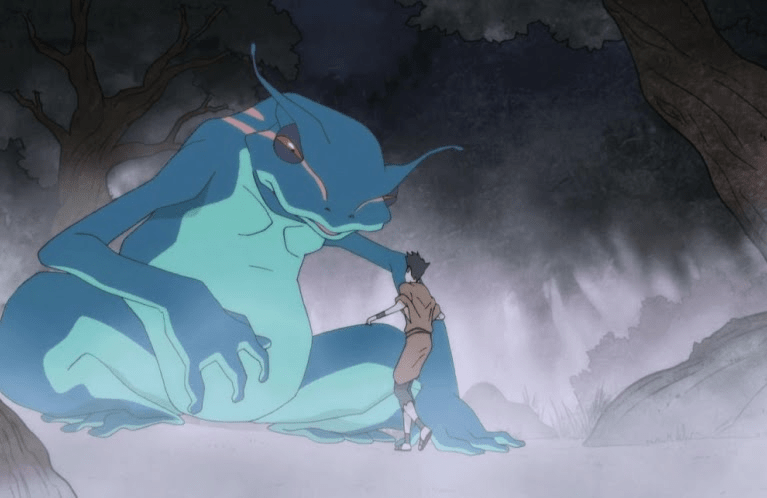
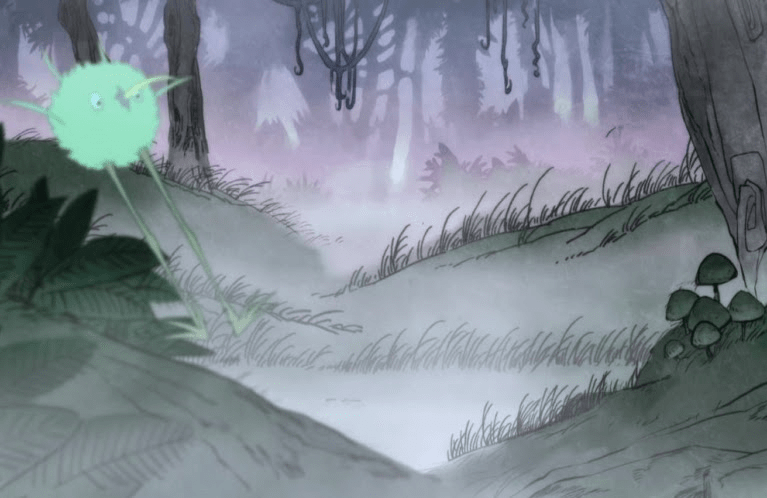
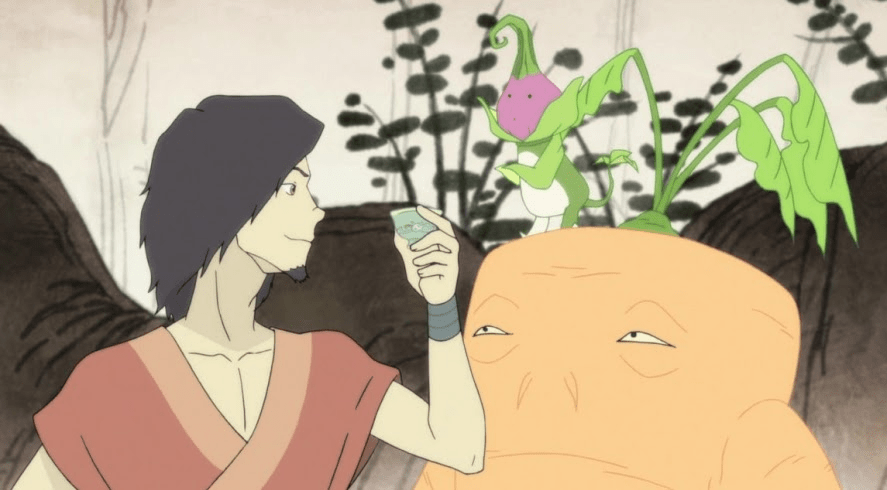
Do you guys remember how the spirits was portrayed in the Last Airbender? Most of them were based on creatures from the natural world, most notably Hei Bai who was a giant panda, and Tui and La who took the form of koi fish. This was because the spirit world was a reflection of the physical world. They each represented a part of nature, and when that part of nature was disturbed, the corresponding spirit took on an appearance that appeared less, well, natural. Koh the Face Stealer’s unearthly appearance could be attributed to his perverted nature as a spirit, feared even by the others in his realm. But even he’s just a giant centipede (who just happened to steal the faces of other creatures).
This is what helped make the Spirit World feel consistent and grounded despite being an inherently mystical and fantastical place. It also helped that visits to the Spirit World were sparse in the original show. I guess the designers on the team for Korra had a different idea for the spirits though, that idea being to just draw weird things and call them spirits. Because the Spirit World is a weird place, right? Now there are all sorts of abstract, Ghlibi-esque blobs with no grounding in anything relatable to the physical world.
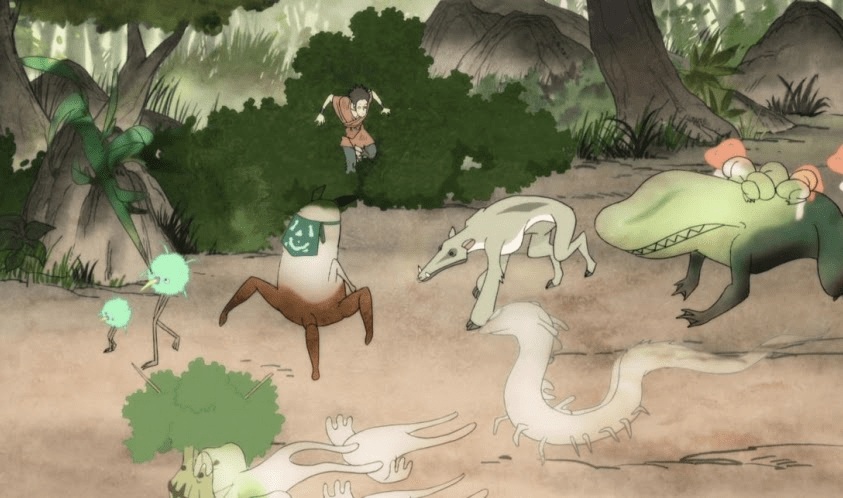
And why are there spirits in the physical world, anyway? I thought the Spirit World was only accessible by the Avatar or highly enlightened people like Iroh.
Oh, how could I forget? There are spirit portals now! That’s right! You don’t need to meditate into the spirit world or achieve spiritual enlightenment! There are literal walkways to the Spirit World that even let you keep your bending! Iroh reaching transcendence after the death of his son? What an idiot! Aang needing to travel to the North Pole to find a waterbending teacher? You woke up right next to a portal, you dumbass! The Avatar being the bridge between the two worlds? Who needs that when we have literal bridges between the two worlds? Isn’t that great!?
Anyway. There are portals now and this was a period when they were open, which explains why there are spirits everywhere. I hate the portals, if you couldn’t tell. The portals can fuck off, honestly.
Wan, after surviving a fall off a cliff that really should have killed him, comes across the famous Spirit Oasis. Only it’s guarded by an aye-aye spirit who refuses to let a stinky human like him in. Wan, ever the conman, tries to get in disguised as “Bushy the Bush Spirit”, and it actually works, only Wan decides to walk as slow as humanly possible so the aye-aye catches his stink and throws him out yet again. He finally tells Wan to fuck off to another lion turtle city if he can’t go back to his own, and Wan is surprised to learn that his city isn’t the only one is existence.
So Wan sets out to find another city when he comes across a cat-deer trapped in a net. Looks like he caught a lucky break! He gets his fire ready, eager to make it his dinner, but it gives him the puppy-dog face and he decides to release it instead. Then the hunters from before show up and reveal that the trap was laid by them. They start to get ready to take down their haul only for Wan (who, just to remind you, was ready to cook this animal about five seconds ago) to tell them to back off. He’s rescuing this animal, and he doesn’t give a damn if these people need to bring back food for their town.
Are you kidding me right now? If you’re not interested in eating the meat, that’s your prerogative. But these lads caught this creature fair and square. You can’t act like they’re in the wrong for hunting you stupid, stupid episode. That’s their job.
Wan blasts fire directly at the huntsmen and runs off so they can give chase. Along the way, Wan engages in Looney Tunes-style antics where he uses all the spirits he found out about the hard way the night before against the hunters. During this chase, a guy gets swallowed by quicksand, another guy gets carried away by some spirit bees (please don’t ask), and it culminates in a third randy getting temporarily possessed by the aye-aye spirit, disfiguring his face and body permanently. The lead huntsman runs away in fear.
So to recap: Wan got someone killed, someone else carried off to fates unknown, and someone else permanently disfigured for the crime of wanting to eat dinner that they caught. I wanna harp on the third guy for a bit because the way his limbs twist and contort during the process is reminiscient of bloodbending and looks utterly painful.
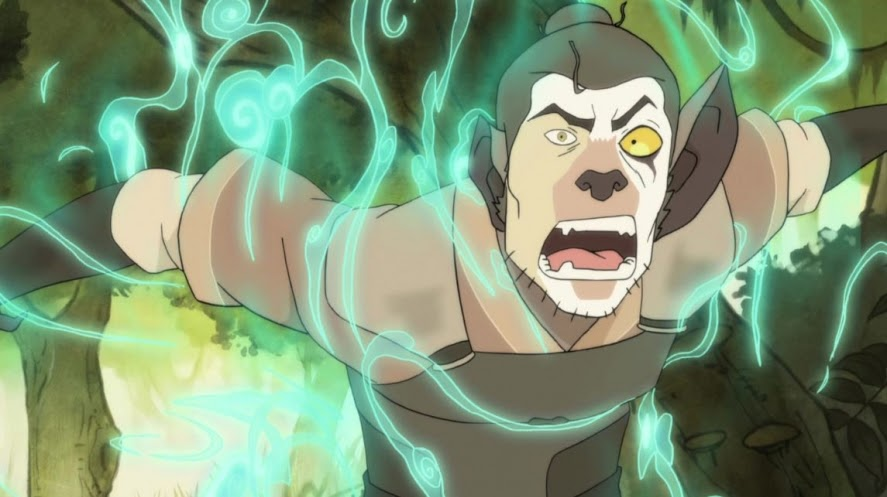
The episode completely glosses over this body horror with a joke, too.
[Aye-Aye Spirit]: I don’t know what he’s screaming about. He’s better looking now.
Yeah, Wan is a massive dick. And in case you might still think I’m being disingenuous by saying that the show treats Wan like he’s in the right, this act is what endears him to the spirits. The aye-aye finally decides to let him into the oasis and even live among them.
I have no idea why the aye-aye spirit went after Wan, by the way, and neither does the episode. He says he saw Wan’s act of, uh, “kindness” with the cat-deer but this was well after Wan was out of his sight and Aye-Aye shouldn’t have cared to check on him anyway.
They dip Wan into the spirit water and he’s healed instantly too. I thought spirit water, like any water, needed to bended along the chi pathways. But I guess all you have to do is plunk them into the pool and voila!
…I don’t even know why I’m pointing this shit out anymore.
Anyway, we get an exchange I kinda like.
[Aye-Aye Spirit]: I’ve never had a human as a pet before. I think I’ll call you…Stinky.
[Wan]: The name is Wan.
[Aye-Aye Spirit]: Stinky is more accurate.
So the lead huntsman goes back to the city and explains to everyone how Wan fucking murdered the rest of his crew. Inspired by this, Jaya leads Yao and a whole bunch of townfolk to take fire from the lion turtle and strike out on their own in the wilds too, no longer seeing a need to live under the Chous.
Meanwhile we see Wan performing…the Dancing Dragon.
Nice try Bryke, but you’re not winning any brownie points from me. You already spoiled this by telling us you no longer need any physical or mental training to firebend.
After some time (Weeks? Months? Years?) of Wan living with the spirits, getting better at firebending, and fending off the huntspeople, Wan finally decides it’s time to see the rest of the world. He hops on his cat-deer Mula (the same one he saved) and sets off.
He travels and travels and travels until he hears a big BOOM! Apparently some “all-powerful spirits” are battling and the conflict threatens to take out the entire valley. Wan goes to check it out and we see, uh…
I don’t even know how to describe this. Two spirits that look like prayer rugs are grappling with each other.

Wan tries to break them up, and the blue one screeches at him to stay out of it. The red one begs for help and tells Wan that Blue has tormented him for 10,000 years. Wan decides to trust the red and black spirit with the evil, booming voice and severs the connection between the two, after which Blue screams in pain and shrinks. Red sarcastically thanks Wan for his “service” and flies away.
Blue starts to severely reprimand Wan, and the poor fool, not realizing what he’s done or who he’s talking to, still thinks that all he’s done was save a spirit that was being bullied. Blue finally explains that she is none other than Raava, the spirit of light and peace. The red one is Vaatu, the spirit of darkness and chaos. She keeps the world in balance by keeping Vaatu restrained…or rather, she did until Wan showed up.
Oh, we will get to all of this in time. Believe that.
Wan, in what seems to be his first moment of self-awareness since his introduction, realizes that he’s at fault for releasing chaos into the world by freeing Vaatu.
Yes you are, my friend.
Back in the present, Korra says she’s finally found Raava.
And that’s Part One of Beginnings!
From what we just went over, I think it’s safe to say it ain’t great. So far, we’ve ruined bending and the Spirit World, delivering two major hits to the fundamentals of Avatar’s worldbuilding. We’re not doing too great in the character department either. Wan is a borderline sociopath when he’s not a complete idiot, and now we know he’s basically doomed the world due to his being self-righteous dumbass.
And this isn’t even the worst of it.
I’ll see you guys in Part 2.
 Ibrahim Noir
Leave a comment