
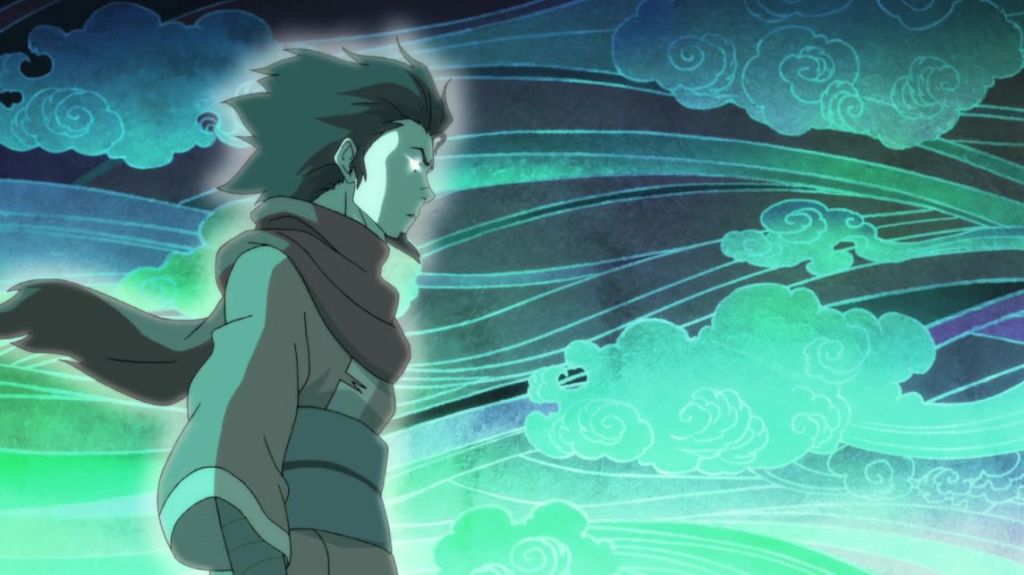
Legend of Korra
Book 2: Spirits, Chapter 8
Last time on The Legend of Korra, Korra got amnesia for no reason, Old Azula almost set herself on fire trying to kill the Avatar, we learned Korra’s earliest predecessor was somehow an ever bigger brat than she is, we Broke Bending Beyond Belief, the Spirit World was retconned to be inhabited by Ghibli knockoffs, and we’re about to retcon the very nature of the Avatar!
Are you ready?
I’m not.
Let’s hop back in!
PLOT BREAKDOWN
So one recap later, we’re back with Korra in the spirit pool…
Why?
Her task was to find Raava, and she’s found her. Without lifting a finger, no less. Shouldn’t this be the end of it? Shouldn’t she be reconnected with her Avatar spirit?
Well no, because we’re not done learning about the origin of the Avatar.
Okay show, whatever the hell you want.
What’s funny to me is that Old Azula says to the other Fire Sages about Korra, “We can only hope she survives her ordeal.”
I’m sorry, survive what? She’s laying in a pool while a two-part episode of television plays in her head. What danger is she in? Believe me, if there was a way to fuck this up, Korra would find it.
But this is hardly important. We have bigger fish to fry back in flashback land.
We need to talk about Raava and Vaatu.
As we established in the last episode, the two were locked in an eternal battle because Raava needs to keep him in check to keep the world in balance. Wan’s interference and their separations means that the world is now headed towards annihilation. The two are clearly meant to be analogues of yin and yang.
Let’s lay into that a little bit. Get out your notebooks, because Professor Ibrahim is about to give you all a lesson in Chinese Taoism (cause the writers could definitely use one).
The concept of yin and yang refers to opposite, but complimentary energies that manifest physically and balance each other out, creating and stabilizing what we understand to be the universe. They each refer to many energies, but to name a few relevant to this story, yin is positivity, order, light, strength, and activity. Yang is negative, chaos, darkness, weakness, and passivity. Sounds enough like Raava and Vaatu, right? Where they fucked up is that it’s actually yin that’s masculine and yang that’s feminine. Not that I’m too interested in the genders of these carpet spirits, but it does show a lack of care in representing the concept.
Anyway, if all this yin/yang stuff sounds a bit familiar to you, that would be because Avatar already did this with Tui and La, two other spirits who explicitly in dialogue and in visual represent the Chinese philosophy. As you can guess, they did it better in that show. In fact, they pretty much make Raava and Vaatu redundant.
🤓☝️ “But Ibrahim, you said yin and yang represent many energies. Tui and La only represented the push and pull of the ocean and moon. Light and darkness, order and chaos, etc. are all still fair game.”
I dunno, Koh the Face Stealer’s explanation made them sound a bit more generalized than that.
[Koh] Tui and La, your moon and ocean, have always circled each other in an eternal dance. They balance each other. Push and pull. Life and death. Good and evil. Yin and yang.
The “eternal dance” bit on top of an earlier part of the conversation where Koh says, “That has been the nature of their relationship for all time” implies Tui and La were around from the start. It’s worth mentioning also that everyone, on the good and evil teams, are against Zhao’s plan to kill the moon spirit because it will throw the world out of balance.
So Bryke stepped on their own toes and just reused the concept here. Kinda lazy but fine, I guess. What about their backstories?
Well, Tui and La were spirits who gave up their immortality to become part of the physical world to keep it in balance. Raava and Vaatu are grappling with each other for the same purpose, and they do so in the physical world for…I actually have no idea why. If there are indeed portals to the spirit world, shouldn’t Raava and Vaatu be duking it out in there? But of course, this is just me searching for a narrative reason. The actual reason is because if Raava and Vaatu weren’t in the physical world, Wan wouldn’t have met them and we wouldn’t have our story 
The two’s dynamic is confusing as well. Tui and La kept it simple. Fish spirits keep the balance, moon fish stops swimming, moon goes kaput, darkness and chaos ensue. It’s simple cause-and-effect that establishes the two as dependent on each other. Raava and Vaatu on the other hand, in fact, weren’t actually grappling with each other like I’ve been saying. It was actually Raava who was restraining Vaatu, establishing their dynamic as more one-sided. Raava is the one doing all the work keeping the balance; Vaatu is just trying to escape. Despite the episode claiming that the two are dependent on each other like Tui and La, Raava is an active detriment to Vaatu’s existence. Vaatu actually gets along just fine without her when Wan comes along and separates them. In fact, he flourishes while the split hurts Raava and Raava alone.
Doesn’t seem very balanced to me.
I’m as confused about this now as I was on Haters Without a Cause. To the people who think these episodes are amazing and make perfect sense, help me understand this: Why does Raava need to restrain Vaatu, but not the other way around? Why does Raava continually shrink in size and power when split from Vaatu, while he increases in size and power? Why does Vaatu immediately start plunging the world into chaos, yet Raava exerts no kind of influence in terms of keeping it together? Why is Vaatu able to corrupt spirits, but Raava is unable to purify them? It all makes their dynamic feel arbirtrary and plot-dependent.
Even their designs are incomparable. Tui and La are koi fish that resemble the yin-yang symbol. Simple and grounded while still being symbolic, like most spirits were in that show. Raava and Vaatu’s designs are as abstract and over-engineered as the rest of the spirits in Korra, and they look like their biggest threat would be a pair of scissors.
Tui and La were balanced and worked well within their roles. Raava and Vaatu are unbalanced and are hardly represented well, even if we pretend these events are isolated from the rest of the Avatar canon. I know it all sounds nitpick-y but it’s all in the little details. Lines like this…
[Yue] Our strength comes from the spirit of the moon. Our life comes from the spirit of the ocean. They work together to keep balance.
…are organic, and help Tui and La seem more real and part of the world than the plot devices they, in all honesty, are.
Lines like this, however…
[Raava] He is the force of darkness and chaos. I am the force of light and peace. Since the beginning of time, we have battled over the fate of this world.
… are stale, and read like the show blatantly explaining the function of these plot devices to the viewer, doing nothing to mask the fact that that really is what they are at the end of the day, and how carelessly they’ve just been stapled onto the lore.
But that’s enough about that for now. We’re not even two minutes into the episode! Let’s move along.
Wan offers to help Raava find Vaatu and correct his mistake but she tells him to fuck off and flies away. Wan, not knowing what else to do, just continues his travels.
He travels and travels and…oh come on, what the fuck is this?
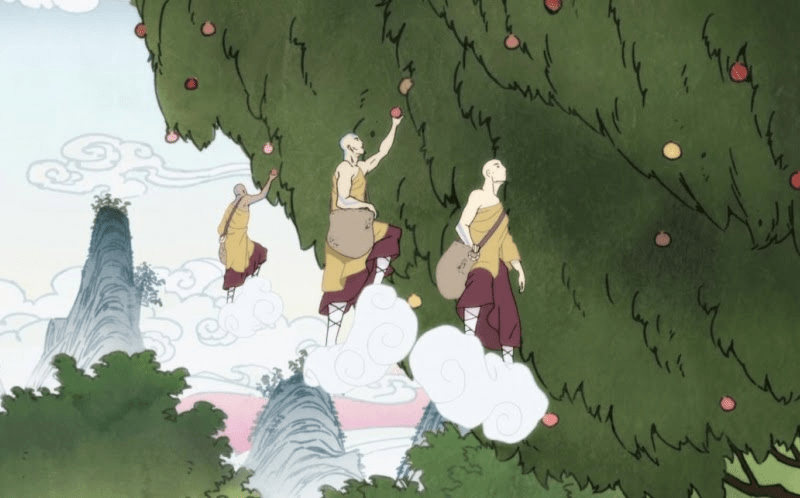
Since when can airbenders levitate on clouds like this is fucking Dragon Ball Z? Okay, forget about how this contradicts Avatar. This isn’t even consistent with Legend of Korra‘s rules. According to this show, Guru Laghima is the only airbender to have achieved flight (before Zaheer anyway), and he accomplished this by releasing all of his earthly tethers and becoming one with the wind or some shit. What in the goddamn hell is this, then? Is this another one of the supposed “old ways” of bending that was forgotten over the years? Fuck off, show!
I guess I shouldn’t be surprised. This is the continuity where you can punch out a fire blast on accident.
And hang on, do these fuckers have tattoos? The arrow tattoos that the Air Nomads adopted by taking inspiration from the sky bison (who are nowhere to be seen here)? The tattoos that marked airbending mastery? Why the fuck does literally everybody and their grandmother have one? Are all of these lads airbending masters? Is this woman and her fucking baby airbending masters?
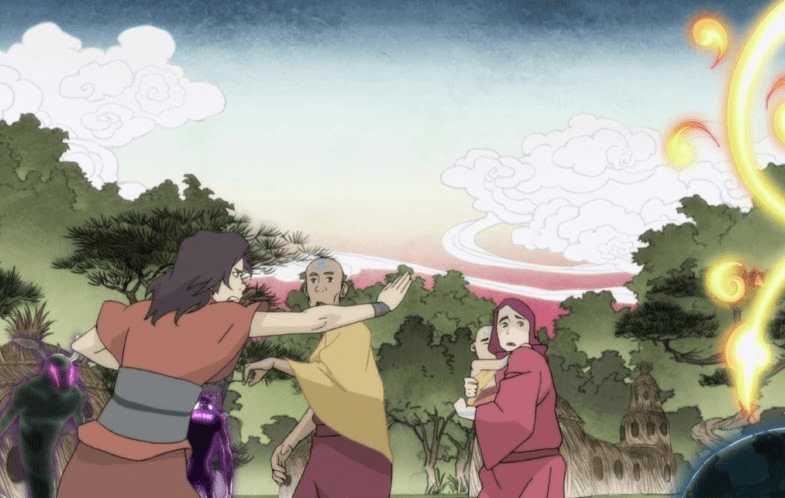
Hey, Bryke? Can you hear me? Do you remember the lore of your own show?
Wan approaches the primordial Air Nomads and they (understandably) run away from him immediately. He sees them flee to another lion turtle, one that flies(?) and decides to head there himself. He flings himself via tree and miraculously doesn’t fall to his death. We see that unlike the early Fire Nation, the air people live in peaceful coexistence with the spirits. They also live in small huts in contrast to the Chous’ elaborate architecture. On arrival to the village, Wan is invited to sit and chat with some air folk. Unfortunately, the spirits start to turn dark due to Vaatu’s incoming presence and attack the people.
[Nomad] Why is the great spirit of the darkness here but not his other half?
[Wan] (nervously) Uhh…I’ll explain later.
Oh, I’m sure you will buddy.
Wan firebends at some of the spirits to keep them at bay (Man, it’s amazing how many problems you can solve by throwing fire at them, huh?) until Raava then shows up and tackles Vaatu (it’s pretty hilarious to watch) and drives the remaining dark spirits away. Vaatu then says this:
[Vaatu] How are you feeling since our split, Raava? I’ve never been better. When Harmonic Convergence comes, I will destroy you forever!
So Harmonic Convergence is an in-universe event where the planets align and the spirit portals converge, bringing the physical and spirit worlds the closest together. It happens, you guessed it, every 10,000 years. In Avatar, it was the summer and winter solstices that brought the realms closest together yearly. Of course, this was back when there weren’t any bullshit portals to fuck everything up.
You know, thinking about it, I think I’d take less issue with the portals if they only opened on Harmonic Convergence. Oh well.
Also, Vaatu is straight-up wrong about being able to destroy Raava forever. You’ll see when we get to it.
Right now, we have probably my favorite exchange in this whole thing.
[Nomad]: Great Spirit of Light, we thank you for your help. But how did you become split from Vaatu?
[Raava] Ask him.
Ooooooh you are in for it now, bitch!
Wan stammers that he was tricked by Vaatu (by telling the truth, it would seem) and that he’d take it back if he could. Raava explains that the more spirits Vaatu turns dark, the stronger he’ll become. We’ve been over this already, but the fact that this doesn’t hold true for Raava as well is ridiculous. And not only that, we’ve hampered the potential of this story. What we could’ve had here was a race against time; purify as many spirits as we can before Vaatu can corrupt them, building Raava’s strength back up for the final showdown (of course, I’m still against light and dark spirits as a concept but I’m restraining myself…for now).
If I were a cynical person, I’d say the writers instead artificially neutered Raava to engineer a conflict. I understand that “as darkness grows, light fades”, as they say in the episode, but the opposite should be just as true. It doesn’t make sense why Raava is so damn useless. It seems like the strongest she can get is “equal to Vaatu.” What the hell gives Raava strength? Why is peace and goodness inherently the weaker of the two in this duality?
Moving on, Wan asks the lion turtle to grant him the power of air so he can defeat Vaatu before it’s too late.
Oh I see what we’re doing here.
You’d think since Wan is the first Avatar, we’d be treated to the first Avatar journey. You know, travelling the world to find bending masters to learn from, learning and becoming a part of the world the Avatar is supposed to protect. Something we got to see in some other, better series. Instead, Wan is going to go around collecting bending powers from the other lion turtles and this is relegated to a montage.
🤓☝️ “But Ibrahim, you can’t expect for them to fit the Avatar journey into such a short amount of time!”
Don’t give me that. “The Avatar and the Firelord” was one episode and they managed to do it in barely the first half of it.
Anyway, the lion turtle says that no human has ever held more than one element. He concedes that Wan may be able to hold both, but orders that Raava is going to have to…hold one for him…because I guess now spirits can possess bending abilities.
I just…are there any other parts of the Avatar mythos you’d like to completely demolish before we continue?
Anyways, read this bit of dialogue.
[Raava] Ancient one, why would I do that for a human? Especially one who’s caused so much trouble!
[Wan] Raava, please. Neither of us can defeat Vaatu alone, but together we have a chance.
[Raava] You may be right. Very well.
There sure are a lot of non-conversations in this special. Characters will bring up an argument, Wan will wax some poetry, and the argument is completely discared. The guy must have some Level 100 persuasion skills.
So Wan thanks Raava and offers to help her restore balance to the world in return, as if he’s doing her some great favor by saving the world and correcting the problem he caused. I’m so glad your new mission coincides perfectly with the one you already set out to do. Wouldn’t want the impending apocalypse to get in the way of your travel plans.
God, I hate this character.
Raava explains that she’s going to have to pass through Wan’s body and combine their energies to swap him the power of air. She says that it’s very dangerous and hasn’t even been attempted.
[Wan] That’s what they said about living in the Spirit Wilds.
Because it was, you motherf—
Deep breath.
Anyway, Raava tries this very dangerous, hasn’t-even-been-attempted procedure to give Wan the air, and what do ya know? It works with no ill effects to Wan whatsoever!
Wan is (of course) puffing air with ease and so asks Raava why neither she nor Vaatu has destroyed one another yet if they’ve been fighting for so long (which, to his credit, is one of many valid questions he probably should be asking). Raava explains that even if she wins, though the world will be at peace for the next 10,000 years, Vaatu will grow inside her over that period of time. And while the same will hold Raava if Vaatu defeats her, the world will be shrouded in darkness and chaos for just as long.
The solution seems simple to me: Grab a pair of scissors and kill Vaatu, wait for him to re-grow inside you, kill him again, repeat as needed, and voila! Eternal peace. It’s gotta be better than wrestling with Vaatu for eternity and just hoping he doesn’t escape, right? 10,000 years of peace admittedly isn’t forever, but it’s still a long time. As far as I can tell, letting Vaatu roam free doesn’t keep the world in balance. In fact, it destroys what tenuous balance it already had. Raava is the only one of the two who doesn’t start destroying the world when left to her own devices. I don’t understand why she doesn’t just terminate Vaatu every chance she gets. He’s too dangerous to be left alive!
(Side note: Given that both Raava and Vaatu are alive and well when we’re introduced to them, I guess we gotta assume neither of them defeated the other during the previous Convergence. Yet another oversight by the writers or Raava’s been non-consensually rolling around with Vaatu for the last 10,000 years. You can take your pick on that one.)
So we get a montage of Wan going to the other vending machines (I mean vending machines (I mean lion turtles)) and getting more powers. As he trains, Raava explains that spirits originally come from the Spirit World but over time, have spilled into the physical world, forcing humans to settle on the lion turtles and lose touch with one another. Right after this, Wan says that most humans think they live in the only lion turtle city in the world, and Raava says, “most humans think only of themselves.”
What is this anti-human sentiment about? Didn’t you just explain that the spirits forced humans to live apart? Fuck off, Raava!
During training, they pick up the smell of smoke and go to investigate. They come across a collection of humans from the fire city…including our boy Jaya! He’s all growed up and he’s no longer the coward he was before. Everyone has fire, which means the lion turtles just hand out fire to anyone who asks now regardless of their reason, I guess. They attack Raava on sight, prompting Wan to jump in to defend her and explain that she’s not like the dark spirits they’ve likely encountered. Jaya tells Wan that the distinction doesn’t matter to him because spirits of all kinds attack humans indiscriminately anyway.
You know what? Fair point, Jaya.
Also, Jaya explains that Yao didn’t make it along the journey. Yeah, I sure was wondering why the guy partially made of wood didn’t make it around all the guys throwing all the fire at all the wood.
Raava shouts at them that they’re only making things worse, but before she can continue, more spirits arrive. The gang of humans delcare that they’re going to wipe them out and they’ll burn down the forest if they have to.
And the exchange that follows is actually hilarious.
[Wan] What happened? When did you become so violent?
[Jaya] You showed us we could change the world if we just stopped being so afraid. Now we’re doing it.
[Wan] This isn’t what I had in mind…
I’d like to remind you all what Wan had in mind last time.
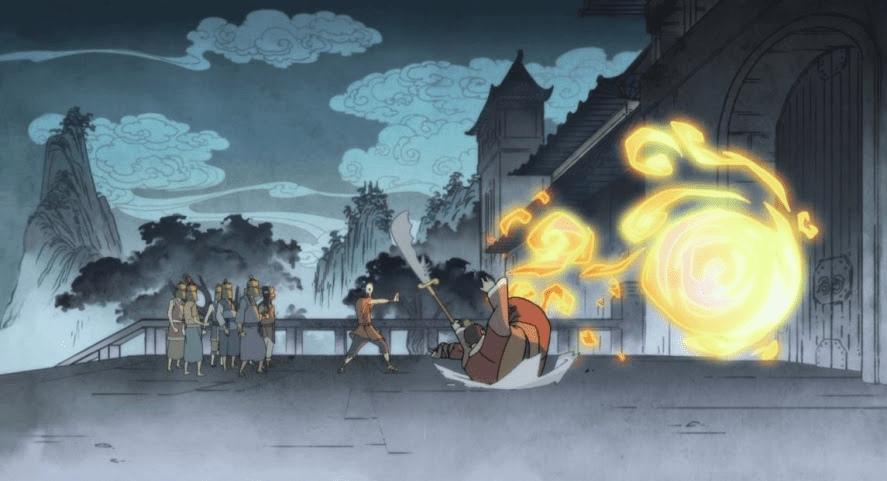
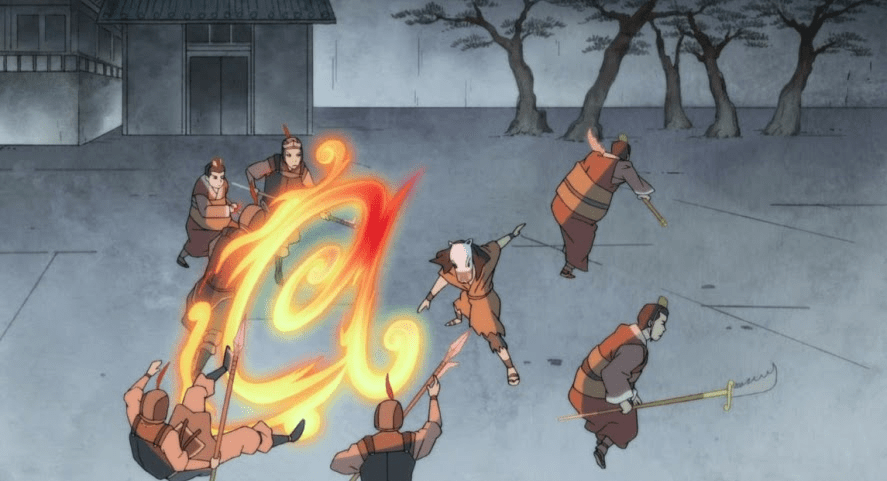
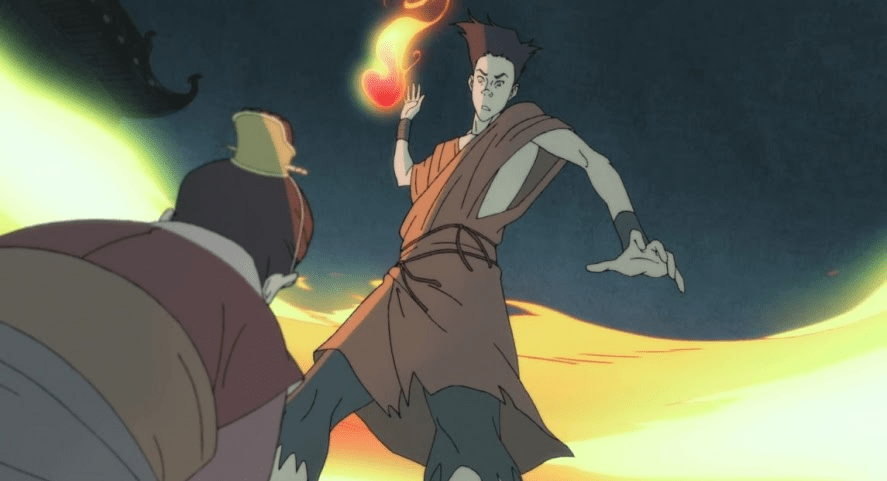
Anyway, Wan steps in between the two groups before they can come to blows and he’s recognized by none other than the Aye-Aye spirit!
Oh…it’s you.
He excitedly tells “Stinky” that he’s just in time to engage in their old favorite pasttime together: murdering humans! Based Jaya counters Wan’s calls for peace by saying he can’t let the spirits get away with killing their friends.
Hard not to see where he’s coming from. As far as I can tell, the spirits, despite having a realm all to their own, infringed on the humans’ territory, forcing them to separate, and murdered/mutilated scores of them for their own sadistic satisfaction. But I guess for the sake of this episode we have to pretend that both sides have a point, as Vaatu feeds off the bad juju and corrupts the spirits further.
Here’s part of the reason I hate the concept of light and dark spirits. The episode would have us believe that both sides in this conflict are justifiably angry. This is wrong, but I can appreciate the attempt at nuance. Now whatever nuance there was has been thrown out the window since they’ve been turned “evil.” But the spirits were planning on killing the humans already. What’s different now that they’re dark? Are they going to super kill them, now? What exactly is the meaningful difference between a “dark” spirit and a regular spirit?
For now, the humans and spirits are on the offensive now, and it’s all Wan and Raava can do to hold them off. Wan then tells Raava that they need to combine their energies in hopes of gaining enough power to stop the conflict. Wan’s eyes glow and he’s able to control a circle of elements in a fearsome visual.
The first Avatar State.
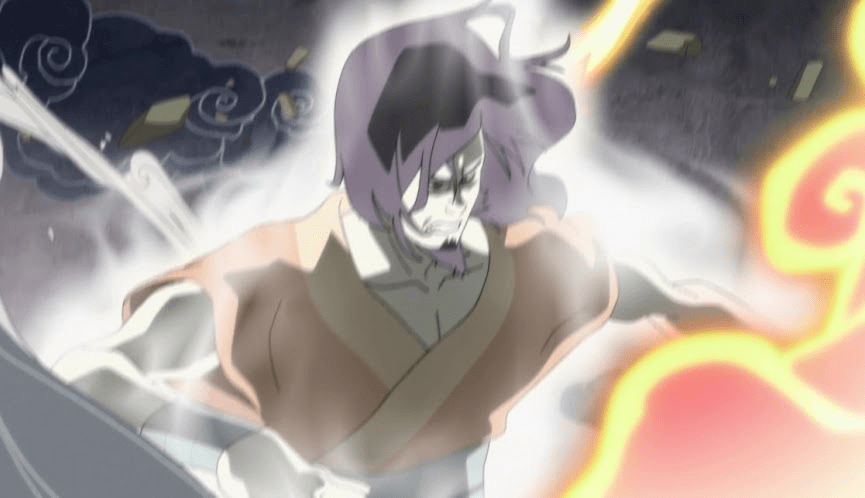
As I understood it, in Avatar, the Avatar State was the result of the combined experience of all the Avatars’ past lives. At least, Roku says as much to Aang.
[Roku] The glow is the combination of all your past lives, focusing their energy through your body.
But Wan doesn’t have any past lives. So I guess Wan is just using…Raava? There doesn’t seem to be a visible difference in power between uses of the Avatar State, so really past lives don’t mean all that much. Kinda makes me wonder why Roku didn’t explain all this to Aang…or mention Raava at all?
Hey Bryke, you didn’t just make all this shit up, did you?
…Bryke?
So Raava warns Wan that if he stays in his body any longer, it’ll kill him, but Wan insists on keeping the power to put a stop to the fighting.
I’ll say here that these are my favorite Wan moments in the special. The fact that he’s ready to put his own life on the line in the name of peace is something I find admirable. He’s kind of a good guy here! And I can appreciate that.
Wan collapses from the stress and Raava is just barely able to carry him out of the continuing calamity. Wan comes to, but it’s too late! Vaatu, bigger than ever, looms over a burning forest and tells Wan that all his human friends are dead and that the end of the world is near. Wan finds Raava, now about the size of an envelope, and she can only weakly apologize to him. In another sweet moment, he tenderly places her in his teapot and makes after Vaatu.
We then cut to Wan approaching one of the portals…
Wait a damn minute.
If he made it to one of the portals then that means he’s at one of the poles…did he cross the ocean? Not on his cat-deer he fuckin’ didn’t!
Anyway, tiny Raava laments not having much time left with Wan. She tells him she never knew humans were capable of such nobility and courage and she was wrong about him and blah blah blah. Wan is a little more optimistic and tells her that the battle’s still yet to begin. After all, this is his first Harmonic Convergence. He crosses into the spirit world and comes face to face with Vaatu, who’s more than ready to easy-mode his myria-annual battle with Raava. Only Wan is just as ready to face Vaatu himself.
[Vaatu] Are you ready for our final battle, Raava? Thanks to our friend separating us, I think this time I may be rid of you once and for all!
Why does Vaatu keep implying he’s going to be able to kill Raava permanently? Is he stupid?
And now, ladies and gentlmen, we have arrived at the final battle. The Ultimate Showdown of Ultimate Destiny that will decide the fate of the world for the next 10,000 years…even though we already know the outcome.
In this corner, we have Wan, the single most dangerous man in the entire world.
And in this corner, we have Vaatu, the spirit of chaos and darkness.
And so they fight, and…it goes on for some time.
Look, I’m sorry. The animation is fucking cool, and it activates my monkey brain the same way it does for everyone else. And the booming drone the sound designers used for Vaatu’s giant spirit laser (I just sighed from having to type those words) is really commanding and powerful. But it’s hard for my eyes not to glaze over after like five minutes of watching these two wail on each other. One of them is an immortal throw rug, and the other is a psycho who’s just too stupid to die. Vaatu is throwing Wan around like a ragdoll and blasting him point-blank with spirit lasers and he just gets back up over and over because he has Black Widow-levels of plot armor, even after he merges with Raava and supposedly weakened from spirit overload.
This is a very cool line, though.
[Vaatu] I lived ten thousand lifetimes before the first of your kind crawled out of the mud!
Also Vaatu lets us know that he was the one who breached the barriers between the physical and spirit worlds. So that’s good to know. The portals invented by this show that no one asked for were created by this chaos entity invented by this show that no one asked for.
Who would’ve guessed?
So Vaatu finally pins Wan to the ground, just as Harmonic Convergence officially begins. The planets align, and the two portals meet in the middle.

Wan, with Raava still inside him, touches the portal next to him and he glows…he falls to the floor and releases a beam of light to the sky from his mouth. He stands up, his eyes glowing, and Raava says this:
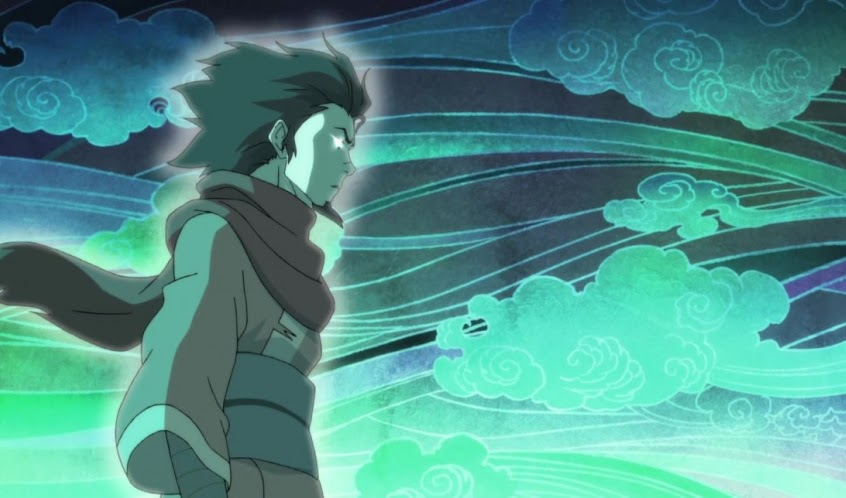
[Raava] We are bonded forever.
Sorry, I know this is what these episodes have been leading up to, but can someone explain to me what just happened? Wan touched a spirit portal, and permanently fused with Raava because of…portal energy? Was this set up at all during this two-parter? This is the climactic moment where the Avatar is born. I think the mechanics should be more, I dunno, clear?
Oh, whatever.
Anyway, you bet your ass we’re gonna talk about this later. Believe that.
Anyway, Aang’s theme plays and Wan Avatar-States Vaatu into an elemental bubble and seals him in the spirit tree with…force field magic, I guess.
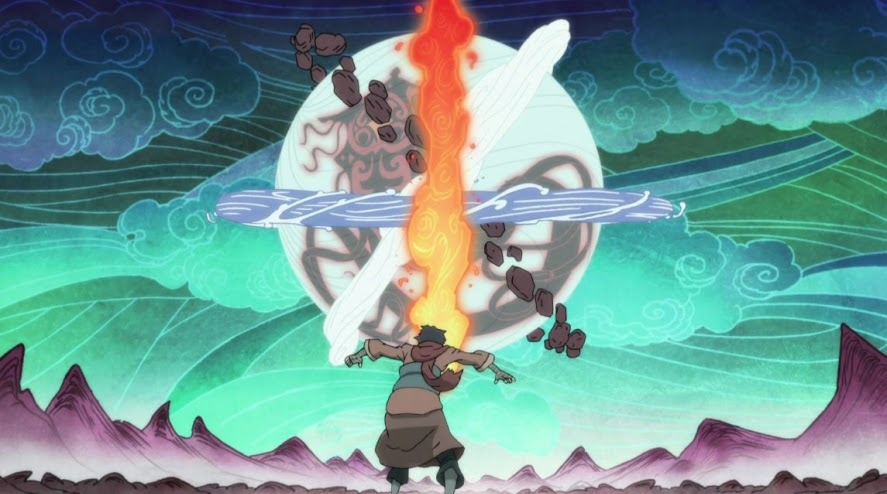
We did it, lads! 🥳 I sure hope no one releases him again.
Wan, in an surprising moment of insight, decides to seal the Spirit World off from the physical world to prevent more humans from entering and potentially releasing Vaatu. This doesn’t solve much long-term, but we’ll get into that later.
In another surprising moment of insight, Wan decides to send the spirits back where they came from. How he was able to shepherd every spirit back into the Spirit World, single-file no less, without the slightest trace of resistance given how territorial they are is anyone’s guess, but hey. Writing is hard.
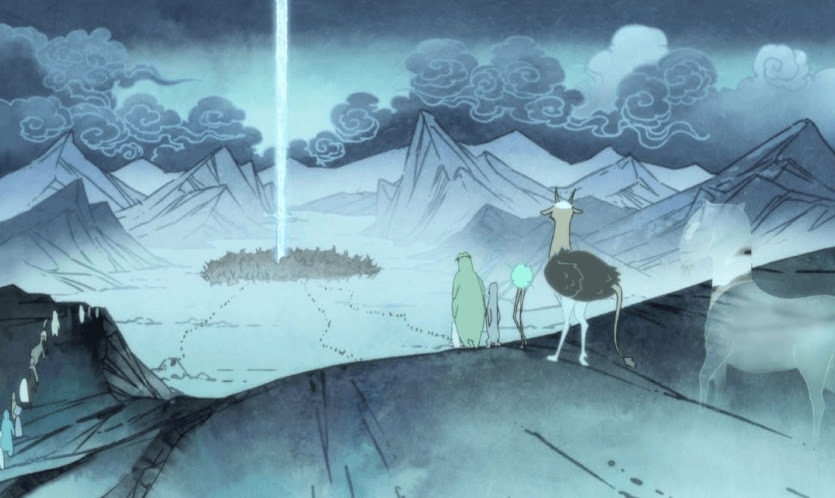
You may already know what I mean by this, but this also isn’t a long-term solution for keeping humans and spirits separate. But Wan’s on a roll here, so I kinda wanna just let him have this one.
Wan then breaks his streak by saying he will teach mankind to respect the spirits to maintain balance.
Uhhh, sorry but no.
Respect or no, it didn’t stop spirits from infiltrating the physical world and forcing mankind to separate and take refuge on the lion turtles. Even the original Airbenders, who had spirits living among them, still lived on a lion turtle and only headed off the turtle to gather food, meaning they were presumably under the same threat of being randomly attacked by spirits. Respect doesn’t mean a damn thing, Wan.
Wan then says that he will be the bridge between the two worlds, which used to mean something because before only the Avatar could travel between the physical and Spirit worlds (unless you were a fucking badass like Iroh). But of course that’s out the window now that these portals exist. The Avatar is really the gatekeeper more than anything else, now.
The lion turtles fuck off, declaring that their time protecting humanity and providing them elemental powers is over (I guess their beef really was with the spirits?) The rest of Wan’s life is told in narration. While depicting wars igniting between the different bending cultures, Wan says:
[Wan] Different groups of people must learn to live together.
I’m sorry, what? Didn’t you just say like a minute ago,
[Wan] The spirits must stop fighting with humans and return to their home in the Spirit World.
Read those back to back. Isn’t there a pretty blatant contradiction here? You forced the spirits back into the Spirit World, separating them from humans because you decided the two groups couldn’t exist in the same plane of existence. Why “must” different groups of people learn to live with each other now? The groups are going to separate into the four nations, and when one person tries to subvert this order (with the best of intentions, mind you) it’s going to lead to a century of war!
Ughhhhhh…..
[Wan] This is my mission: to use Raava’s light spirit to guide the world towards peace.
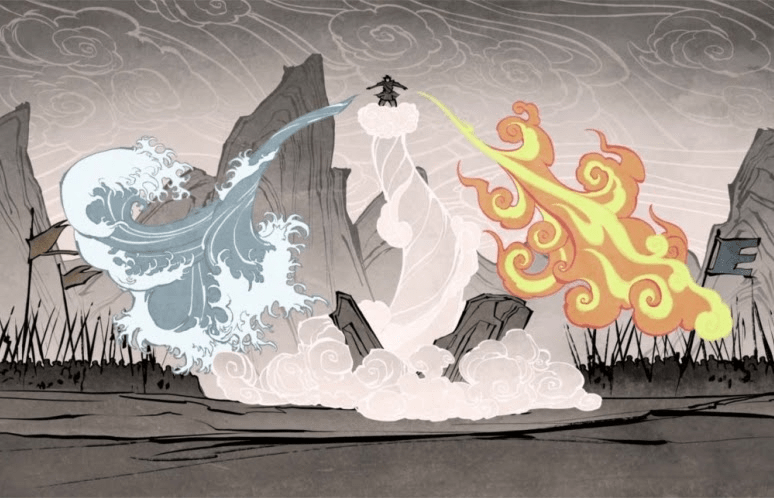
Cut to Wan, now an old man, lamenting on how he failed to bring peace.
This made me snicker.
Unfortunately, locking Vaatu away was not enough to undo the darkness he’s spread throughout humanity. Raava comforts Wan in his final moments, telling him that they will be together for all his lifetimes and they will never give up. Wan draws his last breath, and we fade to white over audio of a baby crying. The Avatar cycle begins. They will continue over thousands of lifetimes and never, ever die.
Right?
I don’t even feel like covering the rest of the episode. Korra wakes up from her plot amnesia and the fire sages take her to a herd of flying bison that they just have laying around (because this show doesn’t give a single shit about the Air Nomad genocide and its consequences on the world), and Korra takes one to reunite with Tenzin and the others.
Woo hoo.
And that’s Beginnings. Holy shit that was painful. Let’s talk about why.
SUMMATION (WHAT HAVE WE LOST?)
There is only one word to describe this special’s approach to worldbuilding: reckless. This pair of episodes blatantly retcon rules established not only in Avatar, but in Korra as well. The foundation of this universe is in such dire condition after this, that the rest of this show can’t even keep up with it. Hell, the rest of this season couldn’t be fucked to conclude without going against the rules these episodes establish. It is such stapled-on content that it is essentially commercialized fanfiction. I’ve talked extensively about some topics, while leaving breadcrumbs for others. But we’re gonna talk about it all here. We’re gonna talk about the sheer damage Beginnings does to the integrity of this franchise.
BENDING
What in God’s name did you guys do to bending? Forget firebending being used to detect spiritual energy. You took one of the coolest hard magic systems in fiction and watered it down to Harry Potter levels of magic where you just flick a magic wand and things happen, only without the wand or even the incantations.
Gone is the training, the discipline, the centuries of learning from the natural world in order to gradually gain influence over the natural world. Bending is quite literally so simple a toddler could do it, and it’s now part of the lore that humans, rather than being born with certain chi paths, were simply given the ability to bend from lion turtles, before presumably passing it down to their descendants.
Fire coming from the breath? No longer! Just punch the air and whoosh!
Water coming from learning the push and pull of the tides? Forget about it! There isn’t even any difficulty for the Avatar to learn the element opposite to their nature.
Command over earth coming from being physically and mentally unmovable? Not a problem.
And air? Just as easy as fire. In fact, you can fly with it without releasing your earthly tethers at all!
Wan switches between all of these as seamlessly as changing his fucking clothes. And no, referencing the Dancing Dragon does not save this. The dragons were the original firebenders, not lion turtles. Humans learned by observing them, not by picking out the skill from a vending machine. Even if you want to go with the excuse that people merely refined their use of bending by observing nature over time, Wan isn’t seen doing this. There’s not a single mention of the moon and ocean, the badgermoles, or the sky bison. Not even the tiniest detail of Wan perfecting waterbending at nighttime.
Bending was a martial art, a skill. One you were born with the capacity to learn, or not. It’s not something you can just download into your body. Have you considered that maybe there’s a reason why Aang, even being a novice, didn’t produce any elements on accident before learning to how to use them (outside of the Avatar state)? Now this bullshit is going to open the door for Book 3 to patch in new airbenders all over the place like a mod for the fucking Sims. It is the genesis of metalbending without seismic sense, remote bloodbending, point-and-shoot lightning bending, and all the other examples of bending limitations getting thrown out the window in this fucking show. Energybending isn’t mentioned even once.
Bending is straight-up magic now. And it’s lame as fuck.
THE SPIRIT WORLD
Now onto the Spirit World. Because holy fuck, this pair of episodes makes a fantastic writing lesson on why you don’t just carelessly drop a bunch of bullshit onto a pre-established setting.
Let’s talk about the spirits themselves.
In the original show, spirits acted more or less like the planet’s immune system, and a mirror to the physical world. Spirits took the form of real world animals and often represented an aspect of nature or life. It was the fickle and indifferent nature of the natural world given form. When the natural world was disturbed in some way by humans, the spirits would often become vengeful and fight back. It was a tenuous balance understood by most humans (regardless of culture), enforced by the spirits, and mediated by the Avatar. Despite how little we see of it in the original show, it was grounded in some logic and fairly easy to understand.
Now the Spirit World is basically an alien planet inhabited by fucking Pokemon. Thanks to Legend of Korra’s overwhelming attitude of “Avatar, but more!”, the spirits are represented by a bajillion abstract blobs of nothing, who are apparently intrinsically hostile to humans, whether or not they show respect for nature. The realm is accessible by fucking portals that any old shmuck can walk through (complete with bending!), so so much for the Avatar being the bridge. The Avatar can open and close the portals, sure, but closing the portals flat out does not keep humans from entering the Spirit World. Not even within Legend of Korra. You can still meditate into the spirit world if you have the EXP for it. Although perhaps we can say closing the portals severely inhibits entry, since humans can’t bend in the Spirit World this way.
…Except human entry wasn’t the issue. Spirits invaded the physical world and forced the humans to separate and hide out on the lion turtles just to survive, only cautiously venturing out for food.
So the only veritable reason for closing the portals would be to keep the spirits out then…right? Wrong again. Hei Bai, Koh, Wan Shi Tong and his spirit library all entered the physical world whenever they damn well pleased. Maybe these are just high-level spirits that are able to ignore the boundary. But again, even within The Legend of Korra, this doesn’t hold up, as low-level dark spirits were able to show up in attack even before Korra opened the Southern portal. The best-faith interpretation is that keeping the spirit portals closed severely limits the amount of dark spirits that can enter and attack humans who have little to no means of defending themselves. This would make the decision a rare Wan W and makes you wonder why on earth Korra would think keeping them open is the better idea.
And why on earth are there light and dark spirits, anyway? Hei Bai turned into a giant monster when his forest was burned down. It represented nature’s wrath, borne from being callously infringed upon by mankind. He didn’t simply “turn dark” and become evil. According to this show, spirits are regularly capricious and offhandedly cruel anyway. So to a human, what exactly is the meaningful difference between a “dark” spirit and a regular one? Why entertain nuance if you’re just going to strip it all back down to black-and-white morality? I don’t remember Aang having to fend for his fucking life when he went to the Spirit World. That is, until he visited Koh the Face Stealer, who looked monstrous because he was a terrible spirit who preyed upon humans, animals, and even other spirits. He was a perversion of the natural order, represented by his unnatural, creepy-as-fuck design. Why have we inserted black-and-white morality in a setting that was deliberately more murky and complicated?
Well, because of Raava and Vaatu, the paragon of everything wrong with the Spirit World. First of all, the two are walking contradictions, being a pair of rugs that apparently depend on one another for survival while also being harmful to each others’ existence. The pair are meant to represent “balance” when one side is carrying all the weight in that regard and the other actively threatens balance in the world. What the fuck is going on with these two? Why is Raava so ineffective when she’s alone while Vaatu grows stronger? Why doesn’t Raava just kill Vaatu in perpetuity if he’s such a potent threat to the tenuous balance the world has? Why do we keep settling for keeping him locked in battle or trapping him inside trees, when all it takes is some wise guy like Wan or Unalaq to come along and set him free?
The whole thing just reeks of the writers clumsily trying to cross Eastern dualism with Western dualism. As we went over, Eastern dualism tends to dictate that good and evil need to co-exist to create balance. Western dualism, on the other hand, tends to dictate that for balance to be achieved, good must destroy/defeat/triumph over evil. Intentionally or not, the writers poured both into this episode’s writing and it’s all but poisoned the concoction. I don’t know if they thought Eastern philosophy would be too hard for Westerners to process or what, but the result is the awkward mess that is light and dark spirits, and more specifically, Raava and Vaatu’s relationship. The two apparently can’t exist without each other, but also need to dominate each other to achieve their respective goals. It’s why we need to merely defeat Vaatu but not vanquish him, even though his continued existences poses a threat to the entire world.
But I guess killing Vaatu isn’t a solution because Unalaq takes it upon himself to beat Raava into extinction in the season finale, only for her to come back later for reasons no one to this day can begin to understand. Vaatu is apparently vanquished by the end, but with how wibbly-wobbly these rules are, he could be back in 10,000 years or he could come back five minutes from now.
In other words…
THE AVATAR
There’s a maxim that’s often repeated when it comes to story (and for good reason):
“Show, don’t tell.”
I’m going to propose a corollary to that particular maxim. Sometimes…
“Don’t show, don’t tell, quit while you’re ahead.”
I maintain that this is not a story that needed to be told. I’m not saying the origin of the Avatar can’t be written well. I’m not even saying it can’t be interesting. But the question these episodes aim to answer are not required to sustain the story of Avatar, and this attempt hasn’t been worth it. There’s a reason the introduction of midichlorians are such a contentious part of the Prequel Trilogy. Audiences were able to buy the Force as an element of the Star Wars universe just fine. We didn’t need to know how and why it worked the way it did, and midichlorians just raised uncomfortable questions. We’ve lost more than we’ve gained. And the same thing has happened to the Avatar.
Just from The Last Airbender‘s intro, we know the Avatar can learn all four elements and that it’s their duty to protect the world. Was anyone really wondering why they’re so powerful or who gave them this mission? In the original pitch bible for Avatar, it was simply stated that the Avatar is the spirit of the planet in human form. An avatar of the planet, if you will. And that worked just fine for me.
🤓☝️ “But I thought you just said we didn’t need an explanation, Ibrahim! Aren’t you speculating on the origin of the Avatar right now?”
You’re right. As concise and succinct as that explanation is, it’s still more than we need. And I am technically speculating. But that’s exactly my point. Even if my speculations are wrong, it should not make a difference. After three seasons, the Avatar was cemented as an entity in this universe belonging to a certain degree of mysticism. By making a definitive origin of the Avatar, that mysticism is completely lost, as is the fun that can come from speculation. And it’s a huge thematic shift.
We’ve retconned bending and the spirit world all to establish that the Avatar is just part of the greater age-long conflict between two flat (both in design and in characterization) spirits. God vs. Satan. We’ve turned something mystical and fascinating to something plain and boring. The chaotic interplay between the four elements with one being serving as the intermediary between them has been boiled down to a painfully simple binary of good vs. evil.
Thanks for that.
I brought up Escape the Spirit World in my breakdown of Part 1. In it, after learning about the struggles and fuckups of his three predecessors, some of which have had devastating long-term consequences, Aang asks Avatar Yangchen why the Avatar is always reincarnated as a human with flaws rather than an all-knowing, all-powerful spirit. Yangchen responds that with the Avatar’s powerful spiritual connection, there must come an understanding of the human condition. Happiness, sorrow, pain, anger, etc. are all things the Avatar must experience to understand how precious life is, and to empathize with the world they’re meant to protect. I thought it was chef’s-kiss beautiful as a message.
Can you understand then, why it might be frustrating to learn that the Avatar is, in fact, a mix between a human and an all-powerful spirit? Yangchen was lying her ass off too, it appears. The Avatar isn’t chosen by the universe. It’s just Raava. And the first Avatar was the result of a human permanently fusing with her…because he touched a portal at the right time. The Avatar can’t bend all four elements of the planet because they’re borne of the planet. It’s just Raava holding onto the other three for them…and the ability to bend more than one element isn’t even necessarily unique because the lion turtles could’ve bestowed multiple bending types onto any person. The Avatar State isn’t the culminating power of the Avatar’s past lives. It never was. Even after Korra loses the connection to her past lives she’s able to use it because it’s really just Raava’s light spirit. It’s more accurate to call it the Raava State.
Everything that made the Avatar special can just be explained now with the spirit living inside him/her. I can’t overemphasize how lame this is. All the titilating sense of wonder concerning the Avatar’s spiritual connection is gone.
🤓☝️ “Oh, come on, Ibrahim. It’s not like the Avatar is all-powerful just because they’re partnered with a spirit. They’re still human!”
But it’s not quite the same thing, is it? The Avatar was a human incarnation of a spirit. Not a spirit. Not a part-spirit. A wholly human being meant to protect the world, but couldn’t quite achieve 100% spiritual enlightenment because of their attachment to the world. But the Avatar isn’t a single entity now. It’s two. A human and a spirit combined together to just…be. What exactly is the point of trying to achieve spiritual enlightenment when you are literally part-spirit? Why are Wan and Korra the only two Avatars who can even talk to Raava? Even the Avatar being the bridge between the physical and Spirit worlds doesn’t mean shit now because of the literal bridges between the two worlds. And Korra doubles down on this by leaving the portals open and declaring that she’ll no longer be the bridge.
(Spoilers: Keeping the portals open is a net loss for mankind. The vines ruin a bunch of people’s homes and Korra’s response is to leave Republic City and tell its citizens to, and I quote, “learn to live with it.” It facilitates Zaheer escaping from prison, gathering the Red Lotus, and plunging the Earth Kingdom into anarchy, and it directly leads to Kuvira building a spirit cannon, which the spirits do nothing to help out with because they still want nothing to do with humans. And that’s off the top of my head. The one conceivable lesson Korra could’ve learned from Wan’s life story and she doesn’t learn it. Lmao good job Korra.)
So there we have it. Just about every aspect we knew about the Avatar has been demystified, if not invalidated entirely. The Avatar has been caught with its pants down and exposed for what it truly is, tassels and all.
And for what? What was this all for? So we could have a Dark Avatar. That’s what Book 2 is leading up to. Now we can have a Light Avatar and Dark Avatar duking it out. If I could make a top ten list of things never ever to do in Avatar, I think “Dark Avatar” would be at the very top with several red circles around it, just above “Dragon Ball Z lasers”. This season has both. We’ve broken three fundamental aspects of this universe to canonize some fourteen-year-old’s fanfiction. This is the reason Raava has never come up before and she’s barely relevant after. She was invented so Vaatu could be invented so the Dark Avatar could be invented.
And so the Dark Avatar can beat Raava within an inch of her life, permanently severing Korra’s connections with her past lives. We’re sadistically made to watch several beloved characters including Aang, Roku, and Kyoshi fade into nothing. All of the past lives, all the way down to Wan, gone forever.
That’s right. Even Wan is killed off in the same season he was created, discarded the minute he was no longer useful to the goal of the writers. Wow. I don’t even like the guy and I think he deserved better.
I can’t begin to understand why Bryke would’ve written backwards from this. I can attribute one or two of these to incompetent writing, but this seems almost pre-meditated. What especially shocks me is how positively these episodes are viewed to this day. Even the nearly-enlightened folk who (rightly) think Book 2 is garbage mark these episodes as the exceptions. It’s so wild because just about all the bullshit in Book 2 outside of the civil war arc can be attributed to these episodes, including Korra losing her connection to her past lives, commonly agreed to be a low point of the series. I can’t believe how nakedly Bryke threw out everything that came before. Was it purely for shock value? Was it to finally extricate this show from Avatar‘s shadow? Make everyone finally shut up about Aang and appreciate Korra more? I can only speculate on the matter, but for now I’ll just say this:
 Ibrahim Noir
Leave a comment